
5 Things That Slowly Destroy an Unpreserved Wedding Dress
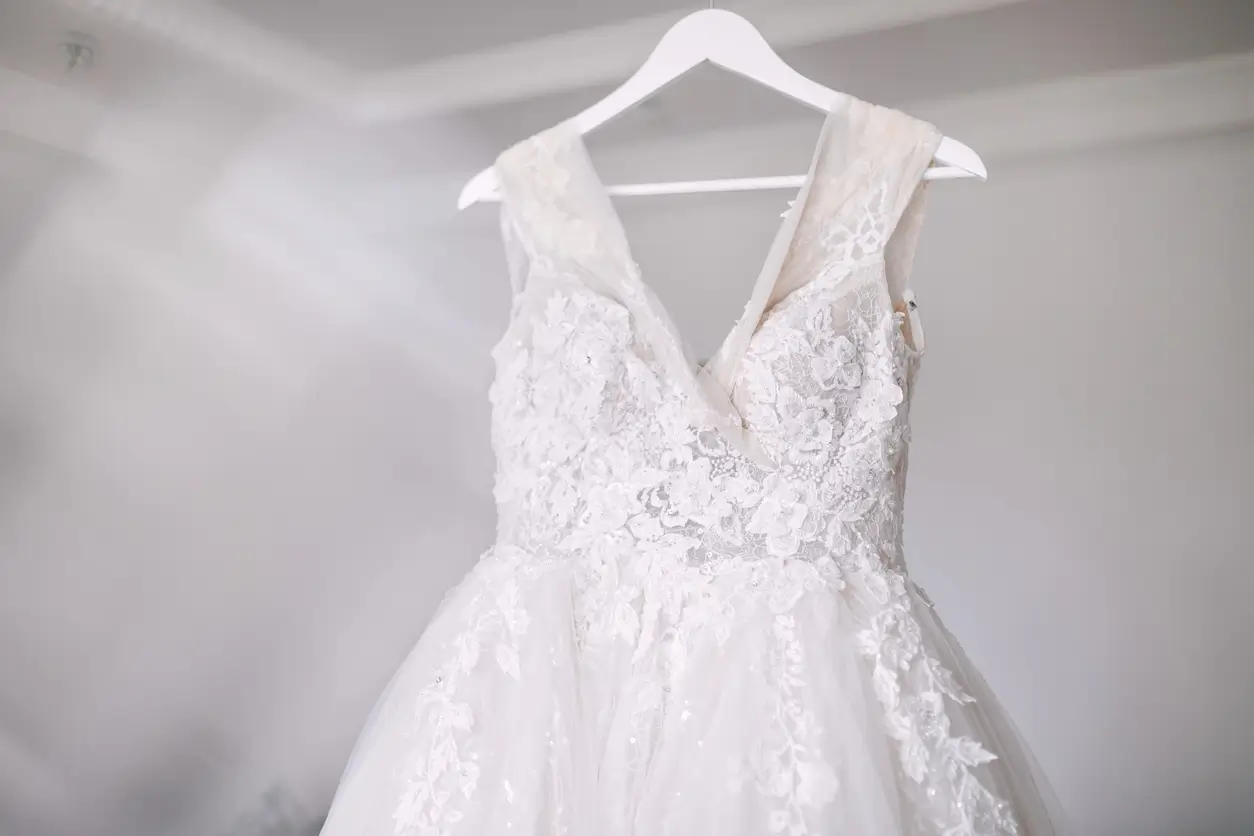
Your wedding dress probably still looks perfect. That's the problem. It can stay clean and white looking for months after the wedding, even while several things quietly damage it at the fiber level. None of it shows right away. By the time you can actually see the damage, some of it can't be fixed anymore.
This isn't about scaring you or rushing you. It's about knowing what happens if you don't preserve your wedding dress right away, and what's actually happening to it now while it sits in a closet, a box, or a garment bag, so you can decide when it's time to take it in.
Force #1: Invisible Sugar and Champagne Residues Oxidizing Into Yellow
Champagne, cake frosting, a splash of lemonade. None of it marks the dress that night, which is exactly why it's the most overlooked threat. Sugar is colorless when it first soaks into fabric, then oxidizes over six months to two years, much like a cut apple browning, into faint yellow-brown patches.
- Champagne and wine near the bodice or sleeve cuffs
- Cake frosting near the hemline or dessert table contact points
- Lemonade or punch wherever the bride held her glass
Where the Damage Is Happening on Your Dress Right Now
Sugar residue rarely stays where you remember spilling it. It settles wherever moisture pooled and dried, most often the underside of a sleeve, the inside of a bodice seam, or the last few inches of a skirt that dragged across the floor. A dress can look spotless under normal light while hidden residue in these folds waits to oxidize.
This is exactly the kind of hidden residue a proper wedding dress preservation inspection is designed to find before it becomes a visible stain.
Force #2: Body Oils and Sweat Slowly Breaking Down Silk Fibers
A full day in a wedding dress means hours of contact between fabric and body, especially where the dress fits tight. Sweat and body oil carry fatty acids that don't just sit on the surface of silk.
They interact with the fiber's protein structure itself, gradually breaking it down at a microscopic level, starting right after the wedding whether or not anything looks stained. Unlike sugar residue, the first sign is often brittleness rather than discoloration, which is easy to miss on a visual check.
- Underarm seams and side panels
- Bodice lining that sat directly against skin
- Boned or structured sections worn tight for hours
Why Hidden Seams Age Faster Than Visible Fabric
The outer layer of a dress had the least contact with the body, which is why it's usually the best protected. Interior layers have the least airflow in storage and are the last place anyone thinks to check. That combination means a dress can grow structurally weaker on the inside for years before anything shows from the outside.
Force #3: Storage Environments That Are Actively Making Things Worse
How and where you store the dress right now matters as much as anything that happened at the wedding. Most brides store their dress the way that's easiest, not the way that protects the fabric, and that mismatch does damage every day the dress sits there.
Museum textile conservators use acid-free tissue, unbuffered muslin, and pH-neutral, climate-controlled storage for exactly this reason. Ordinary home storage does the opposite on nearly every point.
- Sealed plastic bags trap humidity, encouraging mildew and speeding up the sugar oxidation from Force #1
- Cardboard boxes contain lignin and acidic compounds that leach into fabric, causing yellowing independent of any stain
- Humid closets or basements invite mold, sometimes within weeks in the wrong climate
- Hot attics or garages accelerate nearly every chemical reaction already underway, including oxidation and fiber breakdown
Plastic Garment Bags, Cardboard Boxes, and Humid Closets
Each common storage choice solves one problem while creating another. Plastic keeps dust off but seals in moisture. Cardboard keeps light out but introduces acid. A closet is convenient but rarely climate stable across seasons.
None of these fails dramatically on their own, which is exactly why they're so common. The damage is cumulative, building for as long as the dress stays in that environment.
Force #4: Ultraviolet Light That Yellows Even Through a Closed Bag
Direct sunlight is the obvious threat, but UV exposure doesn't need direct sun to do damage. Light filtering through a closet door crack, a garment bag window, or ambient daylight near a window can gradually yellow white and ivory fabrics.
This happens through photodegradation, where UV energy breaks down chemical bonds in dyes and fibers over repeated, low level exposure. One afternoon does nothing visible. Months of accumulated exposure, even indirect, is what produces the yellowing brides eventually notice.
- White and ivory silks are more UV sensitive than synthetic blends
- Beading, sequins, and embroidery thread can fade at different rates than the base fabric, creating uneven color shifts
- Light damage stays almost entirely invisible until it's already advanced
Why Indirect Light Still Counts
A closed closet or an opaque garment bag reduces exposure but rarely eliminates it. Clear garment bag windows, gaps around closet doors, and even the brief light exposure from checking on the dress all add up. Over a year of small, repeated exposures, the cumulative UV dose can be significant even though no single moment looked risky.
Force #5: Fabric on Fabric Stress That Creates Permanent Fold Lines
However a dress is stored, it's under some physical stress. Hanging puts weight on shoulder seams. Folding creates pressure points where layers press against each other for months. Neither is inherently wrong, but sustained pressure in the same spot has a cumulative effect on fiber structure.
Fold lines start as simple creases. Left under pressure long enough, they become permanent structural weak points. In silk specifically, a fold held too long can progress from a crease to an actual split, because the fibers along that line have been mechanically stressed past the point of full recovery.
- Sharp folds at the waist or bodice seam under a heavy skirt
- Beaded or embellished sections folded against plain fabric, transferring pressure unevenly
- Hanging storage that puts sustained weight on shoulder seams for months or years
How Fold Lines Turn Into Structural Weak Points
A fresh crease is elastic and can be steamed or pressed back into shape with minimal effort. A crease held for a year or more behaves differently. The fibers have essentially been trained into that shape, and the sustained bend can thin the fabric at the fold before any tear is visible.
This is one of the more preventable forces here, since correct, museum-style folding with acid-free tissue padding at each fold point avoids the problem almost entirely.
What's Still Reversible Right Now, and What Isn't
Not everything on this list works on the same timeline, and not everything is equally reversible. It helps to think of the damage in two categories.
Generally still reversible if addressed reasonably soon:
- Fresh sugar and beverage residue that hasn't fully oxidized yet
- Early stage body oil residue before it breaks down fiber structure
- Fold creases that haven't been held under pressure for an extended period
- Storage related mustiness or early mildew, if caught before it sets into the fibers
Accumulates permanently the longer it's left:
- Fully oxidized yellow-brown sugar staining
- Fiber weakening from long-term fatty acid exposure
- UV related color shifts and dye breakdown
- Fold lines that have progressed into structural splits, particularly in silk
There's no single cutoff date where a dress crosses from one category to the other. This is exactly why an individual inspection matters more than a generic rule of thumb.
The Reasonable Timeline for Acting Without Panic
Every dress ages differently based on fabric and storage conditions, so there's no universal deadline that applies to every dress. What matters more is understanding which stage your dress is likely in and acting before it moves into the second category above.
- The sooner residues are addressed, the more of them are still in the reversible stage
- A dress stored in a sealed plastic bag or a hot space ages faster than one in breathable, acid-free materials
- Silk and delicate embellished fabrics generally have less margin than sturdier synthetic blends
- An inspection can tell you where your specific dress stands, which beats guessing from a general timeline
Questions to Ask Before You Choose a Preservation Method
Not every preservation option offers the same protection. A sealed "cleaned and boxed" service is quick and inexpensive but skips true archival handling.
Genuine museum-standard preservation uses individualized inspection, acid-free unbuffered materials, and treatment tailored to the specific stains and fabric of your dress. Before choosing, ask what materials are used, whether or not the dress is inspected stain by stain, and whether or not the process is reversible later.
Bring Your Dress to Pier Cleaners Before Time Makes the Damage Permanent
Right now, your dress sits somewhere between fully fixable and permanently marked, and every week that passes moves it a little further toward the second category. That's not a reason to panic. It's a reason to find out where things actually stand.
At Pier Cleaners, Wedding Dress Cleaning and Preservation Service for Westerly, Rhode Island brides is a hands-on craft, not a box and seal shortcut. Each dress receives a careful inspection, gentle stain treatment, moisture controlled storage, and acid-free sealing built to hold up against yellowing and time. We also offer FREE Pickup and Delivery Service, so your dress never has to leave home unattended.
For anyone searching for Wedding Dress Cleaning and Preservation Service near Westerly, Rhode Island, reach out and tell us how the dress has been stored, and we will map out what can still be saved.
Phone: +1 401 394 4119
Get Started with Pier Cleaners Today!