
The Right Way to Load a Washing Machine for Best Results
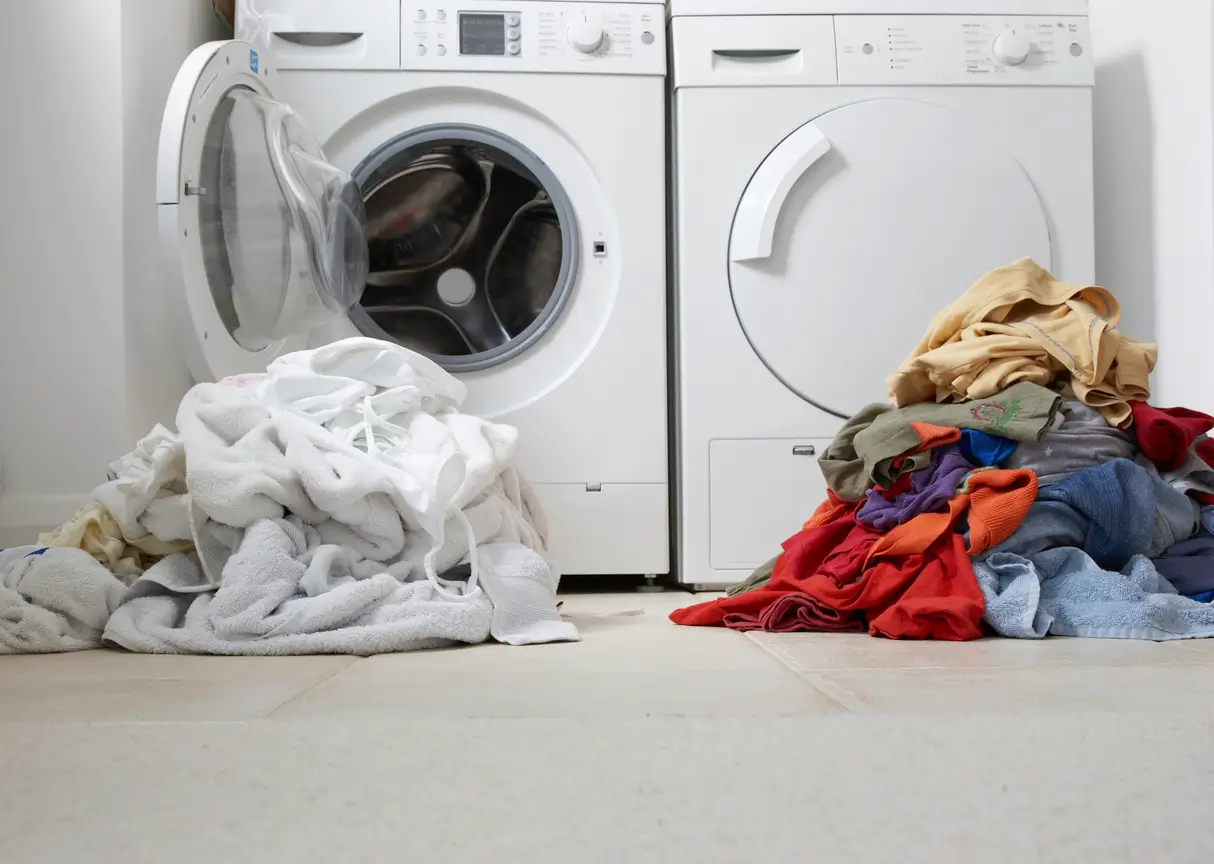
How full should you load a washing machine? Most people load it the way they were taught years ago, and most of that training was wrong. Clean clothes depend on three things reaching every fiber: water, detergent, and agitation. Pack the load too tight, stack it unevenly, or dose the soap in the wrong spot, and at least one of those three never fully makes contact.
The cycle still runs. Clothes still come out damp and smelling like detergent. They just aren't actually clean. Here's what your machine's manual glosses over, broken down step by step.
How Full the Drum Should Actually Be, and Why Overloading Is the #1 Mistake
Overloading is the most common laundry mistake, and it's rarely on purpose. Most people fill the drum until it looks full, not until it's actually at capacity. Clothes need room to move so water, detergent, and agitation can reach every item. Pack the drum too tight, and none of that happens: soap residue in the folds, trapped dirt, and wrinkles set in from clothes crushed together for the whole cycle.
What Happens Inside the Machine When You Overload It
An overloaded drum doesn't just clean poorly; it works the machine harder. The motor pushes against more resistance, the spin cycle unbalances more easily, and belts and bearings wear down faster.
Per the American Cleaning Institute's guidance on detergent dosing, detergent is formulated for a specific water-to-fabric ratio, so overloading stretches that same dose across too many clothes to work properly.
The 3/4-Full Rule for Top-Loaders and the Hand's-Width Rule for Front-Loaders
Here's the guidance most manuals bury in fine print. For a top-loading machine, fill the drum to about three-quarters full, loosely, not packed down. For a front-loading machine, leave roughly a hand's width of space between the top of the load and the top of the drum opening. Front loaders rely on tumbling clothes through a smaller pool of water, so they need even more open space than top loaders to work correctly.
A Quick Way to Check Your Load Without Guessing
If you're not sure whether you've hit the right amount, use this test:
- Reach into the loaded drum. If your hand slides in without resistance, you're in good shape.
- If you have to push down clothes to close the lid or door, you've overloaded it.
- If the drum looks more than half empty once clothes are added, a smaller load still cleans properly.
Underloading wastes water and energy, but it never hurts your clothes the same as overloading.
How to Distribute Items So the Load Cleans Evenly and Stays Balanced
Filling the drum correctly is only half the job; arrangement matters just as much. Don't let one heavy item, such as a towel or folded jeans, sit alone on one side. Spread larger, heavier pieces around the outer edge and let smaller items such as socks and washcloths fill the gaps. That keeps weight distributed evenly instead of clumped in one spot.
Why Unbalanced Loads Wear Out Your Machine Faster
An unevenly distributed load throws off the spin cycle. You'll hear it as loud thumping or the machine walking across the floor. Beyond the noise, an unbalanced spin strains the drum bearings and suspension, components that are expensive to repair. It's a leading cause of premature washer failure, and it's almost always preventable just by spreading out items first.
Where Detergent, Pods, and Softener Actually Go
Detergent placement depends on your machine type. Get it wrong, and clothes come out with soap streaks or don't get properly cleaned.
For top loaders without a dispenser drawer, add detergent to the drum first, let water start filling, then add clothes. Pouring it onto a pile of dry clothes means it sits concentrated in one spot instead of dissolving.
Pods follow their own rule regardless of machine type: always into the empty drum first, underneath the clothes, never on top. Pods need direct water contact to dissolve. Sitting on top of dry fabric can delay that long enough to leave a sticky residue.
How Much Detergent You Actually Need (Most People Use Too Much)
More detergent doesn't mean cleaner clothes. Too much leaves residue on fabric that traps dirt and odor instead of releasing it. Check the marked line on the cap or dispenser and measure it; don't eyeball a pour. Soft water areas typically need less than the bottle recommends, while hard water areas may need slightly more.
Detergent Compartments in Front-Loaders Most Owners Never Use Correctly
Front-loading machines almost always come with a dispenser drawer divided into separate compartments, and most owners either ignore the divisions or guess wrong. The compartments are typically marked, but here's what each one is actually for:
- Main wash compartment: usually the largest section, holds your regular detergent for the primary wash cycle.
- Prewash compartment: smaller and often marked with a Roman numeral I, is only used if you've selected a prewash or soak cycle. Leave it empty otherwise.
- Fabric softener compartment: usually marked with a flower or star symbol, holds liquid softener only. Never put detergent here.
Pouring detergent straight into the drum of a front loader, instead of the dispenser drawer, means it releases all at once rather than being diluted and timed with the wash cycle. Using the compartments as designed means the machine releases each product at the correct point automatically.
What to Load Together, and What to Keep Apart
Sorting by color is the habit most people already know. Sorting by stain type and fabric weight is the part that actually determines how clean things get.
Keep these categories separate:
- Heavy fabrics and delicates: denim, towels, and bedding can snag or stretch delicate fabrics such as silk or fine knits during agitation.
- Protein-based stains and oil-based stains: bloodstains, sweat, and other protein stains set with hot water, so they need a cold wash. Grease and cooking oil stains need warm water to break down. Washing both types together forces a temperature compromise that fails one or the other.
- Heavily soiled items and lightly worn items: a load of visibly dirty gym clothes releases more soil into the wash water, which can redeposit onto lighter, less soiled pieces in the same load.
If a garment has a specific stain, treat and wash it for that stain's needs first, even if it means running it separately. One stained item in a mixed load often forces the whole load into a temperature that's wrong for either the stain or the rest of the clothes.
Front-Load vs. Top-Load: Small Loading Differences That Matter
Both types clean effectively, but differently, so loading habits should shift depending on which one you own.
Front loaders use less water and rely on gravity and tumbling instead of an agitator. That's gentler on fabric overall, but also more sensitive to overloading since there's less water to work with.
Top loaders, especially older agitator models, use more water and rely on that agitator to move clothes through it. That handles heavy soil well but is rougher on delicates, which do better in a front loader or a top loader's delicate cycle.
Front load cycles typically run longer than top load cycles, sometimes by 20 to 30 minutes, because the machine uses less water and more time to compensate. That's the machine working as designed, not a malfunction.
The Two-Minute Pre-Loading Check That Saves Whole Garments
Before you start any load, run through this quick sequence:
- Empty every pocket. Tissues, pens, and coins cause the most common in-wash damage, from lint covering an entire load to ink stains that ruin multiple garments at once.
- Close zippers and fasten hooks. An open zipper can snag delicate fabric in the same load or damage the drum's interior over repeated cycles.
- Unbutton button-down shirts. Buttons under stress during agitation are more likely to crack or pop off entirely.
- Turn printed or dark garments inside out. This reduces friction on the printed surface and limits fading on the outer side of the fabric.
Two minutes of checking before you press start costs far less time than replacing a garment the wash cycle ruined.
Bulky Items, Comforters, Blankets, and Towels, Loaded Correctly
Bulky items need more, not less, open space than a standard load, even though they take up more visual room. Load a comforter or heavy blanket alone or with only one or two other bulky items, never mixed into a full load of regular clothes. These absorb a lot of water, and a near-capacity drum won't let them get properly saturated or rinsed.
Fold large items loosely and let them settle in rather than balling them into a tight knot. A tightly wadded comforter behaves like one heavy object during the spin cycle, throwing off balance the same way a single heavy item does in a regular load.
Signs Your Machine Is Too Small for the Item
If a comforter or blanket fills more than half the drum before the cycle even starts, your home machine likely isn't sized for it. Watch for the item barely moving during the wash, water not visibly circulating through it, or the machine struggling to spin it out. In these cases, a laundromat's large-capacity machine or professional cleaning gets a genuinely clean result instead of a repeatedly partial rinse.
When You're Unsure How Much to Load, Leave the Laundry to Pier Cleaners
Three-quarters full, a hand's width of space, the right detergent in the right spot, it adds up to a lot of guesswork for one load of laundry. We'd rather you not have to think about any of it.
At Pier Cleaners, our Wash and Fold Laundry Service means every load gets measured and loaded correctly by someone who does this all day, every day, not squeezed in between other chores. When you're in need of Wash and Fold Laundry Service, our ten plus years of serving Westerly, Rhode Island still rely on gentle, effective detergents and methods that protect your clothes and home essentials, rather than simply get them wet.
Schedule a FREE Pickup and Delivery Service and let us get it right for you.
Phone: +1 860-453-5421
Address: 50 High St., #5, Wakefield, RI, 02879, United States
Get Started with Pier Cleaners Today!